

Alana Markel
Catching up with the rising New York artist about growing up in North Carolina, learning how to write songs during the pandemic, and falling in love.

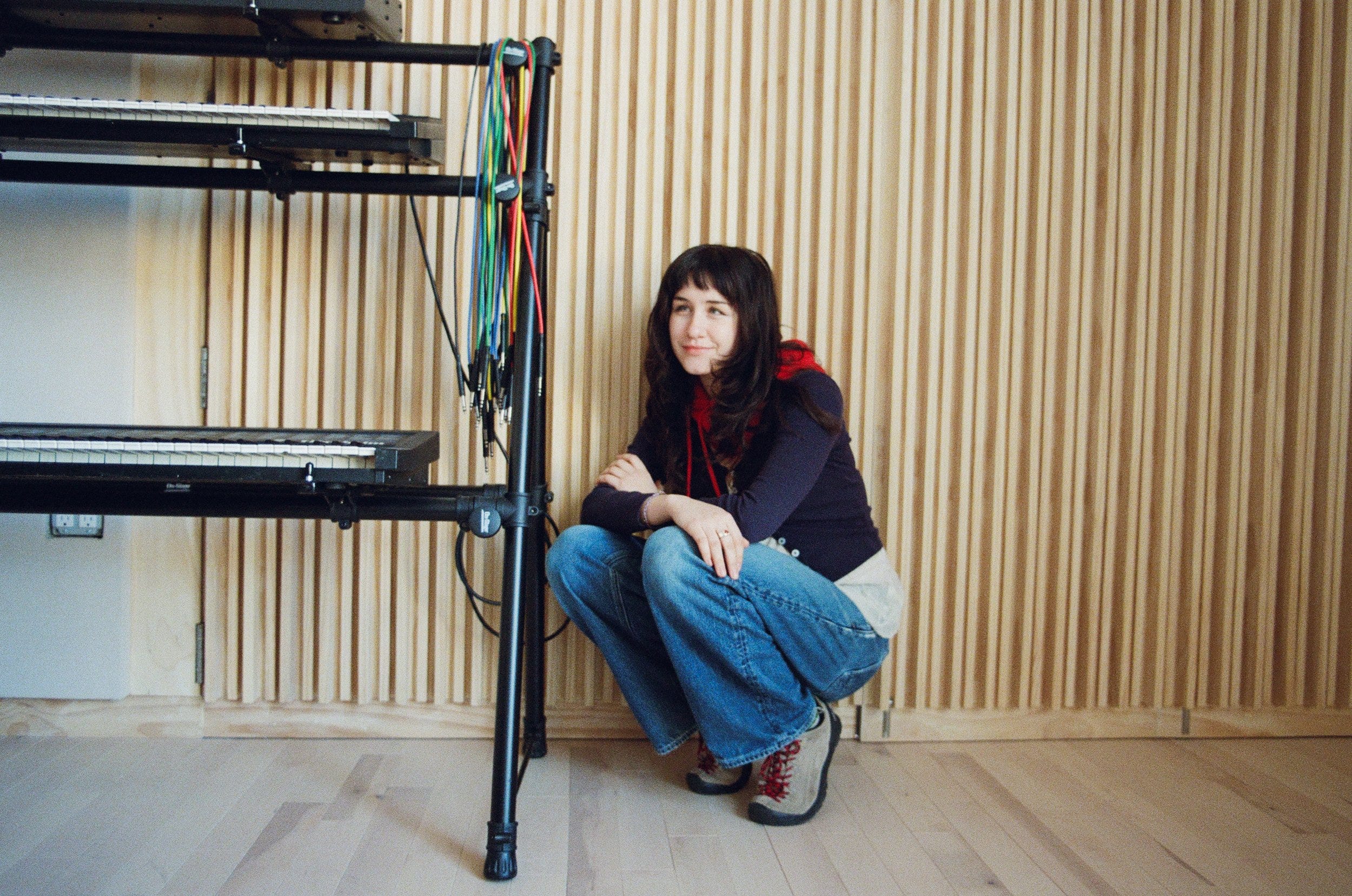
My first concert of 2026 was a small 3-act bill at a 50-cap room in Echo Park back in January. I was there to see the New York artist Heaven Slight, whose cloud rock track “Silver Shining” had found its way to me at the tail end of the previous year and piqued my interest. Performing last on the bill that night was Alana Markel, a fellow New Yorker whose name and music I’d never heard before, though as soon as she opened her mouth, it became clear how glaring an oversight that was.
The first thing that jumps out at you about Markel’s artistry is her voice; it’s this shimmering, resonant, chimeric thing that, any time you feel close to pinning down, suddenly shapeshifts out of your grasp again. My first thought when I heard her sing was “Oh, she sounds like Imogen Heap,” but then a second later I wondered, “Wait, or maybe Angel Olsen?” After the show, my friend mentioned Regina Spektor, and during our call back in May, Markel herself brought up Tirzah. They’re all correct, and yet they all woefully miss the mark. Perhaps communicating in terms of images is easier. When I close my eyes and listen to her voice, I see rolling hills of grass gliding by effortlessly underfoot, a sky filled with cloud wisps and thousand-foot rays of sun, a maiden in a tower without a care for who’s coming to save her. It’s feather-light, effortless, and inevitable.
This past April, Markel released I Love You, her sophomore EP. The record is an enlargement of the clean and measured digital pop sound she debuted with on last year’s Winter Starlet. I love the dynamics on this project, the way the songs drop so suddenly from one movement to the next, her voice serving as the primary source of continuity between shifts. The first half of “Place Like Home,” for example, plays as a delicate admission of the comfort found in the company of someone you love, before a kick drum suddenly drops in and invites the full swell of emotion to come through. Project midpoint “Otherwise” is all brooding synths and lyrics about the parts of our interiors that remain untouched by others, until a muted drum break starts up and churns the song into motion. My favorite track, though, is the closer, “Plane Landing,” which is relatively bereft of instrumental accoutrement and leaves space for a devastating vocal performance about how sometimes what we fear isn’t death, but what it means to go on living.
A couple months ago, I had the chance to reach out across time zones and catch up with Markel over video chat. We talked about her origins, songwriting process, and what went into the making of I Love You. You can read our conversation below.
Nick DeMasi: I know you’re based in New York now, but where are you from originally?
Alana Markel: I was born in Manhattan, and then I moved to North Carolina. That’s where I grew up. If anyone asks me where I’m from, I say Charlotte. I just feel like anywhere you’re 12 is where you grew up. When I meet people from there, I feel a kinship with them, although North Carolina is really different depending on what city you’re from. When I was 18, I moved to New York. I always knew I wanted to come back because I had these really rosy memories of being young here, and whenever I visited, I just felt so alive. I wanted to pursue acting. I decided that towards the end of high school. I was in a conservatory in Manhattan for my first year in New York, which confirmed that I wanted to do it, and then I went to drama school for university.
When did you start singing?
I grew up playing the piano; that was the first thing I decided I wanted to do musically. It’s funny because I’m really only okay at piano; I’m no virtuoso at all. Then, around the time I moved to Charlotte, I really wanted to sing. I started taking voice lessons and piano lessons from the same person, which eventually just became mostly voice. I would play piano only for the sake of accompanying what I was doing. There was a little bit of opera training, but I was kind of a yeller singer when I was young. I think it was very clear I was never going to be a classical singer. So then I stopped taking voice lessons, and I would just go on Ultimate Guitar Tabs and sing cover after cover after cover after cover. I was obsessed with covering songs. I learned all of Blonde for the piano, and I learned James Blake songs for the piano. I was always really interested in synthy stuff, maybe because that’s the instrument I played, but I was also interested in things that felt a bit otherworldly. I wasn’t a writer, though. I had a couple of piano compositions that were kind of stupid, and I maybe wrote one song from the age of 7 to 20. I was not a songwriter at all.
So what shifted? When did you dive in, and what was the context around it?
It was the end of my freshman year, which was 2020. I stopped drama classes because I just couldn’t act online. I did a Zoom play, and it was really disheartening for me. I was like, “This sucks. This is not giving me that feeling.” At that same time, I got really into, like, essay writing? So I was just writing more and getting interested in words. It was like a switch flipped in me. I wrote a couple songs in 2020, and in 2021, I moved back to New York and took a songwriting class. I was writing a song every week for the class, and then I got Logic and was learning how to produce. I was also seeing this guy who was like, “I’m a producer,” and I showed him one of my songs, and he was like, “I’m gonna produce one of your songs.” It’s so fucking classic. I just got obsessed with the whole craft of songwriting and producing. Acting was something I was very confident in. I had a very strong grasp on what it was and how to do it, but music was this extreme challenge. It felt super intuitive, and it came from a similar creative place in the body, but there were all these technical elements I had zero grasp of. The learning curve was so steep, and that made it really exciting. So I made a song with him, and obviously it was kind of mid, but I just kept going, and it gradually got more and more serious. Do you know who Samba Jean-Baptiste is?
Yeah, I’ve heard Cardinal. And he just released an album that you’re featured on, right?
Yeah. He was another person that I met at the beginning of my musical journey who really changed my ideas about a lot of things. My one friend who I was making music with was very technical and knew how to do all of the technical things correctly, but I learned completely the opposite from my experience with Samba, that it’s actually all the fuck-ups, all the accidents, that make something interesting. Do you know the artist Tirzah?
Oh yeah, love Tirzah.
I love her so much. Her music is so surprising and addictive and private. I was like, “Oh, that’s how you get that.” You need both, obviously, but I knew that was the goal: something that’s romantic and fleshed out, but also minimal and a little bit fucked up, just so it feels human.
Is there a typical point you start a song from? To me it sounds like you begin with the vocal melody, but is that what you’re thinking about when you’re starting a song?
It used to be definitely. When I first started writing, I had to know what I was trying to express, but now I take it wherever I can get it. I don’t need to wait for something groundbreaking to happen to me, because there’s always something happening. For example, the I Love You EP was all about finding some musical quality first, and then writing to that. I like writing that way because it feels more sustainable and accessible. The music winds up bringing out the melody, which brings out the words. That’s been relieving for me, because it means that I can be happy and content in my life haha.
Right, instead of having to plumb the depths every time you want to make a new song.
Yeah. And the depths are still there, even if it’s depths from two years ago, the well still exists. It also tends to be easier to produce. Some of my favorite songs that I’ve written are unreleased because I wrote them at the piano, and now I’m trying to find exactly how to arrive at something on the computer. Because I don’t want to do it the “perfect way,” I don’t want to get a studio and have everything miked and then “la la la,” because I don’t think it would be right. I’ve played these songs dozens of times in front of people, and they exist in all these different memories, but there’s a lot of pressure in making the one final thing. If you’re making beats with someone, or if you’re on your computer making something, it’s way less precious because that’s always been what it is.
It reminds me of that Radiohead song “True Love Awaits.” It eventually got released in 2016 on A Moon Shaped Pool, but the band had been playing it live for at least a decade prior. There are all these live performances of it, but it took them a long time to figure out the right way to put it out as a proper studio product. Were you planning on making I Love You, or did it just happen?
It 1,000% just happened. I’m in a long-term relationship, and there was this period of panic when I fell in love, where I was like, “This is so healthy, what the fuck am I going to write about?” I thought I needed to run away at one point. Having never been in love before, I had a lot of conceptions about my creativity stemming from longing, but the truth is you can write about anything, including being in love, but wanting to run away. It’s all material. But that’s just a preface. I met this guy, Christopher Norman, my friend Rose introduced us. We met for a session, and within the day, we probably made 95% of “Restart.” It was so fast and free. Usually, I have trouble writing lyrics in sessions with people. I can do melody or arrange, but when it comes to words, I would always be like “Let me take this back to my private world.” But working with Chris was one of the first times I felt like saying yes to the feeling because he’s just so responsive. We caught a vibe with the drums and this crazy distorted bass line he played, and I got this image of the scene in Worst Person In The World where everything’s frozen, and Julie is running to the guy who works in the bakery. There’s no story, it’s all about that moment when you’re in this crazy infatuation thing. We got together again and wrote “Otherwise,” then we wrote “First Hour” and “Place Like Home,” which is my favorite. The only one we didn’t fully write in the room together was “Plane Landing.” I wrote a piano part, and then we got together and fleshed it out. It was all accidental. It became clear that I wanted to make some body of work with Chris, and once that happened, I realized this was it, this EP. I mulled over the title for so long, and then, when I came upon I Love You, which is the repeated phrase in “First Hour,” it just made so much sense. I’d gotten feedback from some people that I respect before about not all my songs having to be love songs. That got in my head for a period of time, but then I was like, “No, this is the thing for me right now; this is actually what I’m most curious about.” And it’s about different kinds of love; it’s about identity and self-realization as well. It felt like a really succinct, perfect title.
Do you fall in love easily?
No, this is my first time being in love. I’ve had tons of crushes. I’m someone who crushes easily because I’m super interested in people, and there are tons of interesting, beautiful people in the world, but no, I don’t fall in love easily. Which is why, when it happened, it was wild, because it was so beautiful and so different from the concept that I had in my mind.
There are a lot of lines on this album that fit so well with the actual melody. Like, the opening of “First Hour,” the way that line maps onto the notes really transforms it into this little flourish that enters you so easily. And then there’s “When the walk from train to door starts to feel like war,” on “Place Like Home.” When you’re writing lyrics, are you writing in terms of melody?
Generally, there’s a blueprint for the melody. On “Place Like Home,” for example, it’s following the guitar line, which was the first thing that we wrote. I remember thinking, “What is the image that’s coming to my mind with the melody?” and it was when it’s fucking freezing in New York, and you’re trying to get from the subway to your house. That walk can feel like such a battle. But there’s always room for change. With “First Hour,” the melody was different at first, but then when I wrote the line, “I dream lightly,” I was saying “lightly,” and noticing that it kind of falls down at the end. That’s always how I think about language and melody when they combine, but I was never very self-aware of that.
I listened to an interview that you did with Radio Free Brooklyn, where you mentioned that one of the first CDs you ever owned was Speak for Yourself by Imogen Heap. I have a younger sister, and that was one of her first CDs as well. What do you think it was about that album that spoke to you at that age?
It was different than what I was hearing on the radio, for one. It was also a physical piece of music that I had for myself, which I think is bound to make it a special thing. But also, she’s not afraid of drama. Some people think that she’s too cheeky or whatever, but that’s what I was so drawn to. It is that serious, and it’s also that funny. Her melodies have stuck with me because they have such a trademark sound. I got pretty into it my senior year of college. I was in the experimental theater wing at the time, and had this one class where we would just explore our voice. I would sing exactly where my voice was breaking, and it wound up strengthening it a lot and made her interval-type thing way more accessible to me. That’s when I started utilizing it more in my own songwriting. It feels like a staple, but it could also be something I don’t do as much in five years, because the voice is a living instrument that will constantly change. I do think that Imogen lives in me because of that early experience I had with her music. When you’re seven, everything feels so huge and final and important.
I’m also interested in the references that you had for I Love You, and if they were different from the references that you had for Winter Starlet, the previous EP.
Winter Starlet felt like my novice EP. I was definitely listening to so much Frou Frou at the time. I don’t think I had the thought of “I’m gonna make that,” but it certainly affected so many of the choices I made. Winter Starlet was even more accidental than I Love You because some songs were self-produced, some were made with my friend Emerson, and some were made with my friend Sean. I wanted to release something, so I just looked at all the songs I had, and was like, “These six go together.” It’s a bit all over the place, but it felt like a good opening statement for me. With I Love You, I was listening to so much Stina Nordenstrom; she influenced a lot of the vocal processing choices that we made. When Chris played that bass line on “Restart,” it made me think of “Under Your Command” by her, even though the music we made has way more stuff on it. The references were a way to communicate things, like, “Oh, and then for this part of the chorus, let’s get some Alex G-style guitars.” But I wouldn’t say Alex G is a reference for the EP itself. It’s an easy way to associate and talk about music, not just in terms of the instrument, but how it’s treated. There’s one synth on “Otherwise” that we called the “ML synth” because it reminded us of ML Buch. And then the drums on “Otherwise” felt like Santigold in a way. The whole EP was just about, “What feels like yes?”
It seemed like you were doing something different with the vocal processing on I Love You versus Winter Starlet. Can you add any details about how you treated your voice?
I’ve always been obsessed with chorus on a vocal. I think part of that is because of Tirzah. I remember when I was first learning how to produce, and I was messing with the Logic stock effects. There’s some 60s chorus thing that I thought was so cool. When I started recording, I always gravitated back to it as something that I really love on my voice.
When you say “chorus on a vocal,” what is chorus?
It creates this horizontal layering effect that makes one vocal feel like multiple. People put it on guitars all the time, or basses too. String instruments are famously what it’s used on. It just has this strange thickening quality to it. We found this one specific chorus that we put on a few things with a lot of compression because I wanted my voice to feel very intimate and a little strange. “Place Like Home” has a pretty heavy chorus on it because I wanted it to be like I was in the mind, versus singing to you. “First Hour” is lighter. “Plane Landing” is the simplest song in terms of the way that we treated it. Another thing that defined this EP was the sampled instruments, like the viola and bassoon. They felt really recognizable, but also different in the way we were using them.
I would characterize your songs as gentle. Is that something you ever think about when writing? Do you approach these with a gentle mindset, or is that just something that comes out?
I don’t think I ever go into a song being like, “This needs to be gentle,” but that makes a ton of sense, because I feel very sensitive about everything. When “First Hour” came out, I thought it had been mixed too harshly. I get in my head about wanting things to feel very heartfelt. I have to be gentle with myself when I’m writing, so it makes sense that things feel gentle. Although to me this is the hardest stuff I’ve released.