Sometime this November I was digging around the internet for something new to listen to. I’m one of those people who believes in the power of the social graph, I like gobbling up the trail of digital breadcrumbs (features, purchases, likes etc.) to get me to the next thing. It’s consistently more surprising than whatever the dreaded algorithm dredges up and, somewhat to my chagrin, 99% of what mainstream music journalism covers as well. In this case I stumbled upon Felt Out while diving down a rabbit hole that opened up under New York City electronic twee duo Cicada. As soon as I pressed play on their latest record, Are You With Me?, a stunningly bright and harmonious take on the typically brooding trip-hop genre, I was sucked into their world. The rough timbre of the electronics, the sly openness of the writing, the sharp whistle of the auto-tune, I couldn’t pin down any of it, yet it all grabbed me immediately.
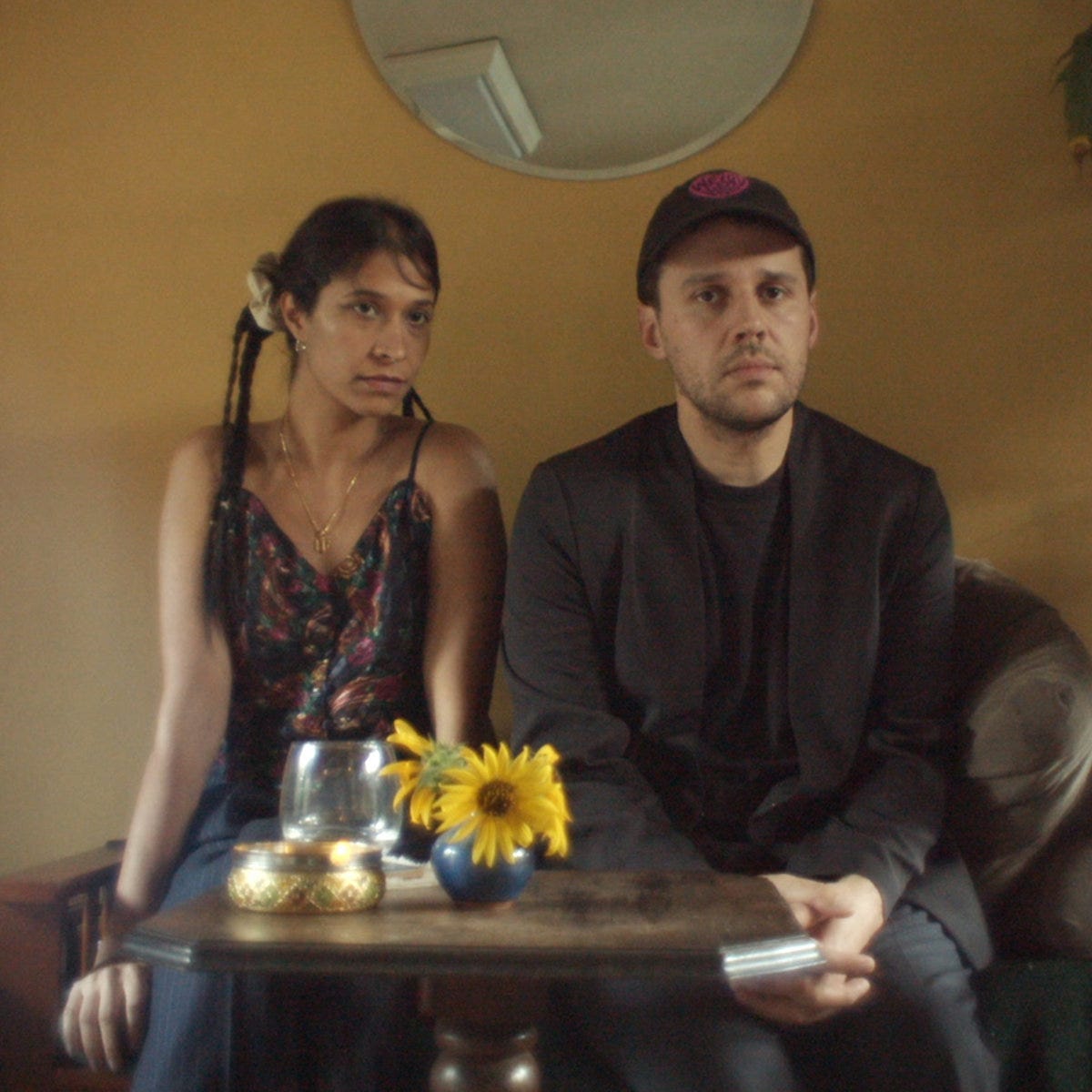
Felt Out are husband-and-wife duo Sowmya Somanath and Walter Nichols, two classically trained musicians based out of Austin, Texas who’ve been trading in a distinct brand of electronically-inflected experimental pop music for the last 8 years. Similar to how England’s PC Music crew harnessed the commercial soundscape of the Y2K-era and used it to usher in a new era of avant-garde production, Felt Out take the vestiges of 2010s electropop and indie rock for the purpose of crafting elegantly tactile and nonconformist tracks. Their 2023 record Until I’m Light feels like an alternative vision of peak pandemic-era genre collision, offering a softer, more mellifluous counterpoint to the underground’s roiling aggression. With last year’s Sleeper on the other hand, they opted to obscure their songwriting details behind randomized waves of digital noise, alchemizing the end product into a self-perpetuating sonic organism in the process. But Are You With Me? is something else entirely, swapping the density of their previous work for a simpler, more patient approach, resulting, somehow, in their deepest and most probing piece yet.
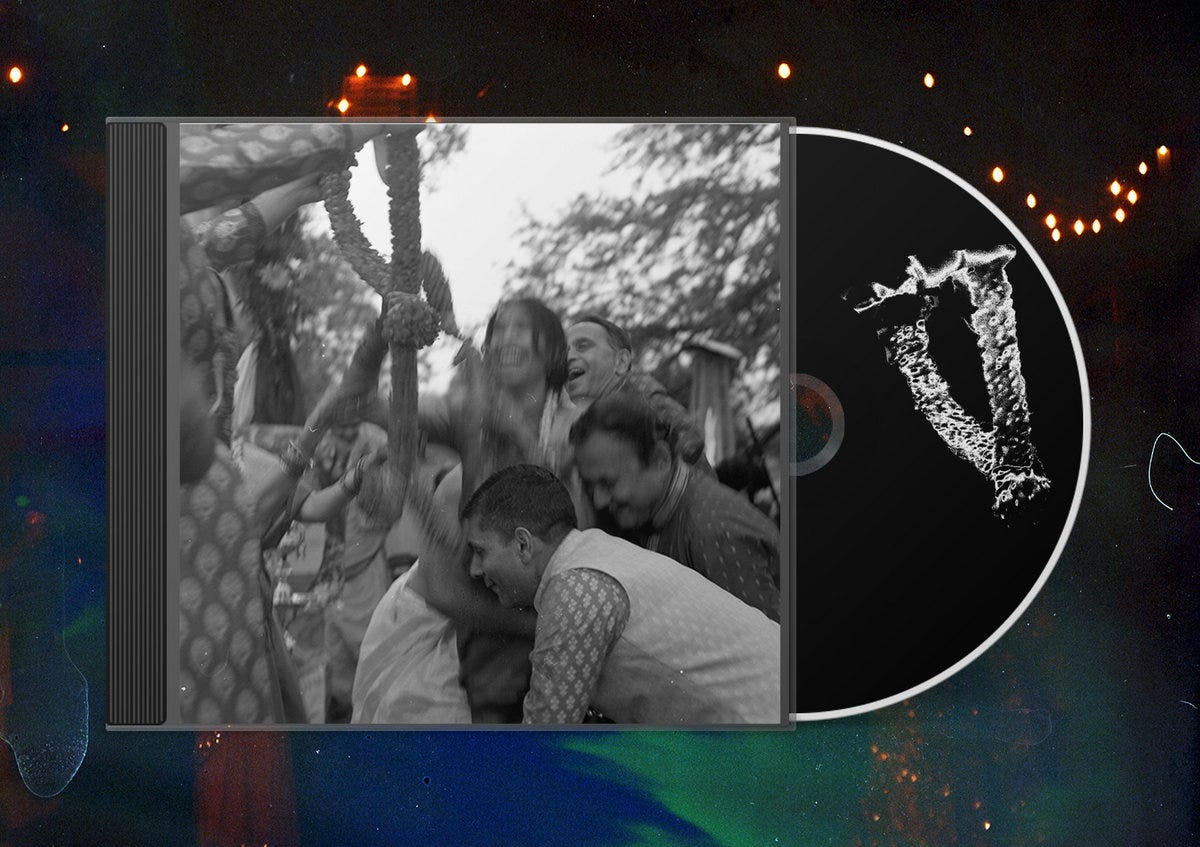
Written in the wake of their wedding ceremony, the album draws on the intimacy of their recent union to examine the nature of connection, what it means to reach out and make contact with someone The song “Please” is the clearest explication of the record’s intent, embodying the subject of a voyeur’s gaze and seeking understanding in return: what are you craving? what are you thinking? how can I please you? Then there’s “Dangerous Dogs” which has the upbeat electro-folksy jaunt of a vintage Alex G tune and lyrics about throwing caution to the wind in search of closeness, despite all the peril it portends. Bolstering the album throughout are Sowmya’s stunning vocal melodies, which manage to bury themselves so deep in your soul they sound new on each return, like you’re uncovering a lost part of yourself in the act of recognition. Nowhere is this more apparent than on lead single “Fruit Cart,” a track written primarily in Tamil, an ancient Dravidian language that makes a number of other appearances on the album. The natural cadence of the language results in a melody with unexpected, at least to Western ears, lateral movement and cresting accents, a pattern that is then matched on the song’s outro with an EWI (electronic wind instrument) solo by Nichols.
Bookending and bisecting the album are three ambient pieces comprised mainly of unhewn drone and distorted found sound. These pieces, one of which is the title track, offer challenging and necessary counterpoints to the music that comes between, mirroring the function of third spaces in the physical world by serving as gaps in time where unfamiliar sounds can become familiar. In the days and weeks that followed my first listen of Are You With Me? I felt a strong desire to cross the void myself, and so it was that I got Sowmya and Walter on the phone a few weeks ago for an interview. Over the course of our conversation we talk about their beginnings in music, their love for physical media, and, of course, the album.
Nick: When I first listened to Are You With Me? I thought to myself, “Oh, I haven’t heard anything like this before,” and I still have trouble finding corollaries for your music. So, given that I have so much difficulty just putting it into words, I was wondering if you could do that for me. And also speak to some of your influences in the process.
Walter Nichols: It’s an ongoing discussion with us... and journey, and search, I guess? I don’t know. I think both of us, being lifelong musicians, like doing music hard since we were really young in two very intense classical systems, we just really live and breathe the purity of music outside of genre. So whenever we make music, we’re trying to surprise ourselves and push ourselves, and that can get really messy because while we pick and choose some stuff in terms of genre, mostly we’re just trying to make something that interests and surprises us musically.
Sowmya Somanath: Yeah, just on a sonic level. Because if you think about it, classical music is pushing the limits of what music can offer as a language, right? It’s not relying on any lyrical content; music is the language. So that plays a huge role in how we experience sound. Genre is always so secondary in our minds. We’ve had to learn how to position our music to some degree, like how to thread that needle for people who are coming into something brand new and need a level of context that we’re not always thinking about.
WN: And also when you’re in it, and this is true with any art, you’re just creating, and then afterwards things come together in terms of style and time and place. But as the makers, it’s hard for us to understand our place.
SS: I’ve been thinking about that too. I feel like our combination of backgrounds is very particular and niche. We grew up doing Western classical music, and I did Indian classical music as well, but then we’re really into pop and electronic sounds and also, like, indie rock? I don’t know, it definitely spans a lot.
WN: I guess we can just straight up list some influences. Definitely Western classical, I love Igor Stravinsky, Dimitri Shostakovich, those are two big guys for me right now. I play Bach on the keyboard every day. And then going into pop stuff, we’re both huge Charli fans. Sleeper was influenced by her 2020 album.
SS: Yeah, we love noise, we love distortion.
WN: Digital noise, yeah.
SS: When we’re writing, it’s so sensory, we’re just like “Oh, that feels and sounds like something we like.”
WN: Yeah, it has a lot to do with the kind of hardware we surround ourselves with when we’re writing an album. So what dictated the sound of Sleeper versus the sound of Are You With Me? was the hardware rig we were working with. Sleeper was Korg Volcas for drums and bass and routing stuff through this crazy, bit-crushing, distortion, and it all being controlled by MIDI just sort of interacting with itself. Making music is almost scary because of how much you can do, so it’s helpful, especially when we’re working on an album, to reign that in.
It’s interesting to hear about how you force yourself to use particular instruments when writing, because a big reason why your music sounds so distinct to me is that the sound palette is very broad. What are your backgrounds in terms of instrument playing? And then what instruments played a role in this particular album?
WN: In terms of instruments, I focus on keyboards and wind instruments. Saxophone is what I started on when I was a kid.
SS: Walter is a crazy saxophone player. He was trained in this very specific style of French classical saxophone playing, like from before jazz existed. It’s so niche, but if you listen to some of these players, their tone sounds like a violin or something, but very dark. And there’s this vibrato to it that’s just so unlike anything you’ve heard from a saxophone generally. I think it’s fascinating because not many people are trained in that school, and so to approach pop music, or like, experimental alternative music, from that lens is just so unusual
Totally. I don’t think I’ve even heard a saxophone outside of a jazz context to be honest.
WN: In early jazz, like the big band, Glenn Miller era of the 20s and 30s, the style of playing that saxophonists would use was actually pretty close. The initial way that saxophone was played was with this fast spinning, constant vibrato. It had a very mellow, warm tone. And then when bebop started coming around, everything sped up, ensembles got smaller, louder, and more brash, and that kind of cemented saxophone as this crazy, wild, fast-moving instrument. I don’t think there’s any saxophone on Are You With Me? but there is EWI, electronic wind instrument, on the song “Music,” so that’s where I can do my saxophone stuff.
SS: I’m like always thinking about how we can create a little more focus around what we were trained in, just to give people that more legible idea of what resonates with us.
WN: Well, that’s present with you and your vocals. I think your melodies are so slippery and elusive but grounded at the same time, which has so much to do with Hindustani and Carnatic music.
Going back to that idea of threading the needle, of taking this really wide, expressive palette of influences and feeding it through genre, you labelled this a trip-hop album, which I definitely think it is, but the sound is just so unlike that of traditional trip-hop. It’s also pretty different from your previous two albums, which are more pop records, or at least that’s the easiest box to put them in. What led to the shift?
WN: I think it had to do with the sound palette, specifically with the drums and the simple background chords. Making these songs was very “Okay, let’s just find a groove,” whereas in the past, it’s been very collage-y, almost like a mosaic, just taking bits of sounds and sticking them together. Here we were like, let’s open up the drum palette, figure that out, and then make a chill groove with strings or piano.
SS: And I think because of the harmony, it ends up feeling a lot more colorful than something you would normally label as trip-hop. When I think back to this album, I still kind of hear it as collage-y, but it came together in this really groove-centric way.
WN: It felt a little more live than previous productions.
How did the writing and recording process of this album differ from your previous two?
WN: It was much quicker. We got the bulk of the tracking done in two weeks. Tracking and writing honestly.
SS: The songs were like 70% done in two weeks.
WN: And the process was actually kind of semi-flipped from previous albums, where Sowmya manned the workstation, and I messed around with chords. So Sowmya was engineering me while I was coming up with the groove. We have the K.O.II by Teenage Engineering, it’s a drum sampler and sequencer that looks like a big calculator. We would get a beat going on that, track it, and then find a chord progression with a microKorg. We only used two patches, a piano patch and a string patch. It was just about not being too precious because both of us, me especially, are prone to overwriting and overproducing. It was an act of doing less.
SS: And I would come up with vocals pretty quickly and track them. We just kind of fleshed it out as we went.
WN: It was minimalist compared to our other records. These project files had maybe 10 to 20 tracks, versus like 80 to 100 in the past.
Sowmya, you sing in Tamil a number of times on the album. What does writing in a different language provide you from a musical standpoint?
SS: It was really fun and totally got me out of my head because I was like, “Okay, most people don’t even know what I’m saying,” and that was kind of empowering, to be able to just communicate through the notes, but then have this extra layer of meaning for me and other Tamil speakers. There was something so shattering about being able to create a melody and just focus on the notes and the rhythm of it. From time to time, though, I would wonder how well people could connect with it.
I think that’s the power of music, right? You don’t need the shared language because the language is the sound at the end of the day. Do you find that you can access different melodies writing in Tamil versus English?
SS: Absolutely, because of the way each language has its own intonations and vowels. For a singer, vowels carry the notes, so there were new combinations of notes that I could create and little details that felt very specific to the language.
Was it a conscious choice to do more singing in Tamil on this record? Or did you just find yourself gravitating to it more?
SS: It was very instinctive at first, and then, once I was aware of it, it became a conscious thing to create a bit of continuity through the album.
WN: I feel like we kind of knew this album was going to deal with our marriage and our relationship and our relationships with our families and our dogs. The fact that we were dealing with this intensely personal stuff made writing in Tamil make sense.
SS: I think we wrote most of the songs either right before the wedding or after. I can’t remember.
WN: It was after. After we got back from tour in February.
SS: Right. We hadn’t written anything in a while because of the wedding stuff, so everything flowed really quickly. In retrospect, it totally makes sense that I was writing in Tamil after all that really intense ritual.
WN: The song “Please” is about that stuff too, but also our relationship with performing, like performer and audience.
That actually leads into another one of my questions. Obviously, the album’s title is a question, and one that’s being directed at someone, but it sounds like that someone is really many someones. Is that the case?
SS: Totally. I think a lot of it is us speaking to an audience, that feeling you get when you’re performing. You’re up there and all you want to do is connect, and so it’s this lingering question of how do you reach an audience? Like “are you with me?” I’m up here for you are you here with me? That feeling comes up so much.
WN: The experience of being on stage and seeing people’s stony, kind of passive, faces, not that that’s what they’re feeling–
SS: Because they could be very active actually, they might be really engaged. We just don’t know.
WN: Yeah. So often performing feels like you’re giving and that’s it, but it can be really magical when there’s a back and forth.
SS: It’s a very hard ask though, so all we can do is hope that people are attentive. And it’s okay, you know, whatever. People are people, and they have different day,s and everyone’s going through their own shit.
WN: It’s also just relationship stuff in general, like what does it take to sustain any type of relationship with another person? It takes active engagement and checking in to keep yourself there with them.
I also wanted to ask about the song “Music.” I think it’s kind of bold to title a song that and then to also basically start the album with it. The song has two parts. It starts with you listing out all these weird and mundane places where you find music, and then it shifts to this feeling of impending arrival, like you’re on the precipice of becoming something. How do those things connect, and why did you put them all under the title of “Music?”
SS: We’ve always been really drawn to the polarity of things. “Music” started as this two-sided feeling of loving music so much with all our hearts and hearing it everywhere, but then on the flip side, that ubiquity making it undervalued from a consumerist standpoint. And it all goes back to what the individual’s relationship is with music. Do you value it as a form of art, or do you just view it as a product that’s meant to satiate you?
Would you say that the latter half of that track is talking more about what that relationship is like for the two of you?
SS: It shifts to the feeling of being on stage. Like, I’m performing, I’m afraid, but I’m also not afraid because I love it so much. And then the “Heaven is on the way” part is slightly sarcastic. Wanting and yearning for something through music is something we’re always wrestling with because we want to preserve that purity around it, but we also participate in the commerce element of it. To us, music is invaluable, but we also want to sustain our lives through it.
WN: And then when the song is in those instrumental, kind of arrival sections, where it’s just drums with an EWI melody on top, it’s like stating nothing and everything by just being an instrumental, just music. The ending is the most clear statement of that.
Are you guys gonna tour this record?
SS: Dude we need to.
WN: We usually tour in the summer, so maybe we’ll do that. We would have done it this summer, but we were traveling for different reasons, and then we toured this fall with our friend Hannah, so we haven’t gotten a chance yet. All of our tours are DIY, and they take six months to put together, so if we start now, we might have another album out by the time a tour comes together.
I had one more question that I wanted to get to. You guys just did a merch drop for this record, and you’ve done merch drops for each of the last three records; you even made a Tamagotchi for Until I’m Light. Could you talk a bit about the importance of physical media for y’all and why you continue to engage in it?
SS: It’s so important. Going back to the song “Music” and feeling like everything is being forced down our throats all the time, there’s a kind of preciousness that gets lost with streaming. Holding a beautiful object that symbolizes and carries this art form is unparalleled. It’s so important to slow down and actually know what you’re listening to, and I feel like physical media is a representation of that reverence for the art, while also being an object of art itself.
WN: And to acquire any physical object, you have to, like, interact with a human. Like your body has to go get it. You have to hold it, and you have to interact with it. Once you get back into the physical media world, it’s like night and day; it feels like being alive.