


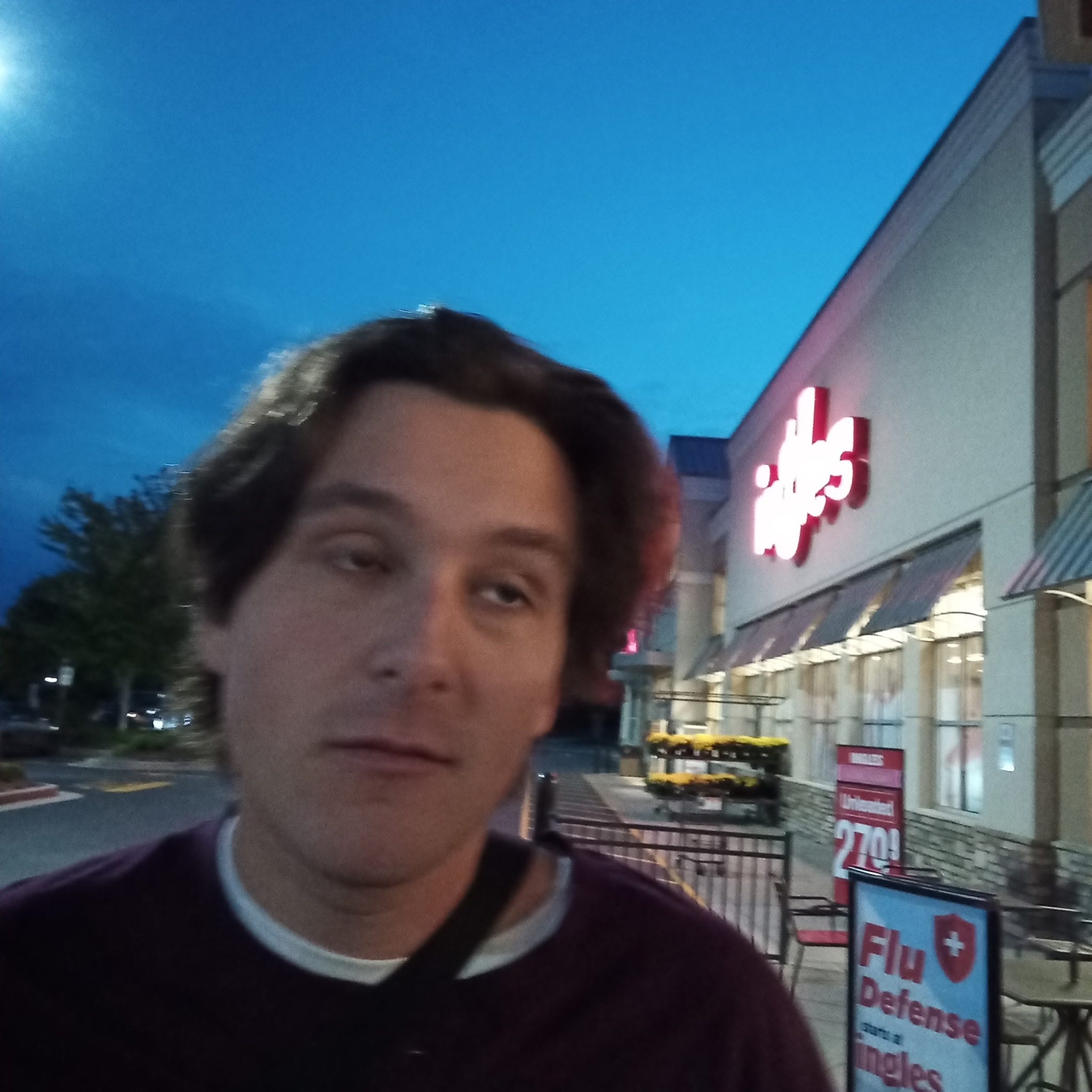
Back in April of this year, I listened to punxsutawney guitarist Sam Takano play a solo set at the old LAX space in Westlake, and make sounds with his instrument I didn’t know were possible. Sitting in the first room of the bisected gallery space that formerly served as the home of the now roving live event collective, I watched the musician take a nail to his strings and file them down into shrill, droning wails which he let sing over languorously looped chords. On the blank wall behind him, projectionist Noah Hoffman casually warped and blended ambient video feeds into mind-bending tessellations that somehow synced perfectly with the movements of Takano’s playing. My mouth stood agape for the entirety of the half-hour set.
According to show curator Leo Dolan, this is exactly the type of reaction he hopes to elicit when he’s putting together the lineups for Leo’s House, his now-on-hiatus LAX residency where he books eight-to-ten experimental music acts to play for one continuous night of music. I went to two of the three shows in the series this year, and both rank as some of the best live experiences I’ve had in 2026. As I’ve written about before, I’m usually not the biggest fan of festivals, even the single-day variety, finding them to be too filled with all the middling interstitial bits of going to see a concert and not enough music. Leo’s House, similar to Open Melody, is precisely the opposite of this; it’s set up to be entirely music, you actually have to physically leave the space to do anything other than listen and watch. The set-up creates a kind of time vortex that sucks you in and spits you out three hours later, wondering what the hell just happened. Your mind having gone full sponge-mode as it gobbled up every sound and sight available.
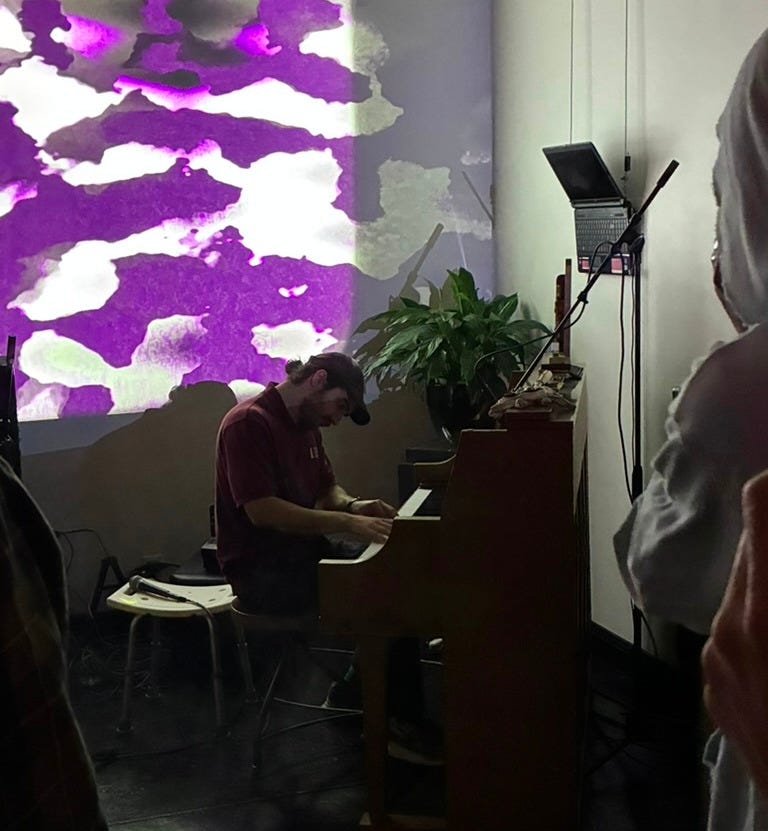
Which is not to say that these are nights of mindless consumption, far from it. The Leo’s House lineups are quite challenging for even the most adventurous music lover. Across the two events I went to, I watched two men detune and retune a piano in the midst of playing it, twenty-something people continuously strum twenty-something acoustic guitars at once, and I just narrowly missed out on a set where someone took a bow to a lamp. Alongside that chaotic experimentation were also more “conventional” but no less compelling acts. My friend Jack Kilgore played a jaw-dropping set of improvised computer music where he stretched and stripped sine waves to their bit-crushing limit, digital folk musician Boxtrod tinkered with new demos that lent an air of childlike tenderness to laptop twee, and LA electronic producer Ava Blank tore up a room with good old-fashioned house tunes. Dolan’s curiosity as a music lover truly knows no bounds, which is why I was excited to chat with him about all the goings-on behind Leo’s House at the tail end of this past July.
Nick DeMasi: What is your musical background like? I know you through your live shows mainly, but you’re also in a band, and you produce other people’s projects. What’s your story with music?
Leo Dolan: Since 6th grade, I’ve been obsessed with music and all its different facets. I was purely a musician until 25 or 26: writing songs, being in bands, playing lots of shows, and touring. Recording entered my life a little later. A question I’ve asked myself before is: where’s the line between show promoter and musician? I found it’s actually best for me not to think about it too much because it’s all just stuff I want to do because it’s fun and fulfilling. I was living in this house in Pasadena with a really big living room, and it occurred to me one day that I could throw some sort of experimental music show there. That one show ignited a fire in me, and we probably had another 40 at that house. I could talk for an hour and still feel like I hadn’t gotten across what I wanted to say about my history as a musician.
Music is special because it’s easy to bleed across all of that different stuff. The nature of sound is very permeable.
My original gateway into enjoying music was lyrics. When I think back to music that touched me when I was young, it was songwriter stuff. There’s storytelling and clear things that they’re trying to express. I love music more than ever, but so much of what I gravitate towards now is in the realm of pure sound. There are so many different doorways into music. You can come at it from so many angles.
Over what time period were you booking those shows at the Pasadena house?
I lived there for two and a half years, and I moved in in October 2023. When my band Finnish Postcard was forming, I was living in this warehouse in Lincoln Heights with my bandmate Trey. It was this big artist compound that was totally falling apart, like leaky and so hot, but then really cold in the winter. It was kind of unlivable. Then we moved into this giant house that had five bedrooms and a detached garage, which was where we made the Finnish Postcard albums. Moving from the warehouse into that house changed my life really fundamentally. I had a bunch of free time because I was injured and unemployed, so I just put together a bunch of stuff there. Having that house brought me the community that I was wanting. It allowed me to be like, “Okay, this is what I have to offer the scene right now.” I can offer the space and the logistical know-how.
Were you booking a lot of friends initially? Or were they more tenuous connections?
A lot of friends’ bands. People being like, “I want to play a show, and I don’t know where to do it.” There were three types of shows that happened there: friends who approached me, festivals that I would throw, which were the precursors to what I do at LAX, and then there were a handful of more famous bands who did underplays the night before they played, like the Troubadour, or whatever. Merce Lemon played there. Unrecovery played there. Fat Evil Children. Sadurn. Maybe there are some others I can’t remember. I wasn’t like, “Let’s have one show a month,” you know; it was more just if I wanted to. But also having a bunch of shows at your house is exhausting. We were basically averaging one show every couple of weeks for two years.
Where did the idea for Leo’s House originate? There was a house, obviously.
Yes, let the record show that Leo’s House does not happen at my house. It happens at LAX.
What is your relationship with LAX? Were you just throwing the show there? Or do you do other programming for them?
I do programming and operations stuff there. I run the newsletter and do show-running things. I’m one of three people that run the place. Phineas started it, and it’s his venue. His brother Benny does sound, and then I don’t have a job title; I’m just on the team. I was throwing these festivals at my old house, and the posters all ended up saying “Experimental music at Leo’s house.” They were all two nights with five acts per night and live visuals. When I started working at LAX, I had an idea to take what I used to do at my house and condense it into one night. That was where Leo’s House came from. The shows are usually between eight and ten acts across two stages with two projectionists, and they’re like a four- or five-hour affair. A lot of the people who played at my old house were traditional musicians who wrote songs and played in bands, but were trying new stuff or playing in new setups. The thing that changed when I pivoted to doing Leo’s House as an event series is I started booking more musicians whose main practice is stuff that falls in the experimental music world, whether it’s noise music or computer music or musique concrete. I also like that Leo’s House at LAX has been a lot about LA music. We haven’t flown in any big headliners, although I do want to do that; it just might be a different style of event if I did.
How do you go about building those lineups? What’s the thought process that goes into putting so-and-so on the bill with so-and-so?
That’s a good question. It’s not super easily quantifiable. It’s almost always people that I’ve seen live before and loved. For the most part, Leo’s House is literally just lineups I want to see; there aren’t specific bases I’m trying to cover.
If there’s not a conceptual thesis, then practically, how do you arrive at 12 people who are all performing together? What does that look like in practice?
I have a huge running list of acts I want to book, and I pick out groups of eight or 10 of those where, if you go to this, you’re gonna see a ton of different stuff that I think fits together well. It’s fun to book a lineup that is a handful of solo acts and a handful of bands. I think it’s fun if you get to hear live drums at some point in the night. I think it’s fun if there are at least one or two acts that are just laptop music, because that’s some of my favorite stuff. Also, the way the nights are structured, there’s no break, so it’s five hours of continuous music. I don’t expect people to stay for the whole time; that’s not the idea. The idea is actually the opposite of that, that you can come and leave whenever you like, and you’ll still get a taste of everything that’s happening. There’s this ineffable feeling I get when I see an act that is actually exciting to me, and I can tell they’re doing something really true to them. If it feels like they’re expressing some essential part of their being while playing, that’s what I’m like looking for.
So you’re not prescriptive about what a great live performance is, so to speak? It’s more about the feeling you walk away with?
Such a big part of being a musician right now is how you promote your music online. Even the lack of a social media presence can be a statement. It’s this complicated thing where we know about these musicians and venues and recurring shows before we’ve ever been to one. There is a feeling I get when I watch someone who is really doing something authentic that makes me want to book them. Also, a lot of the places where you can see experimental music don’t have great sound systems, or they aren’t well treated. LAX sounds really good; it’s treated very well; it has subwoofers; it has beautiful lights. So it’s also fun to give these kinds of musicians a good sound system and be like, “Rip this place to shreds.”
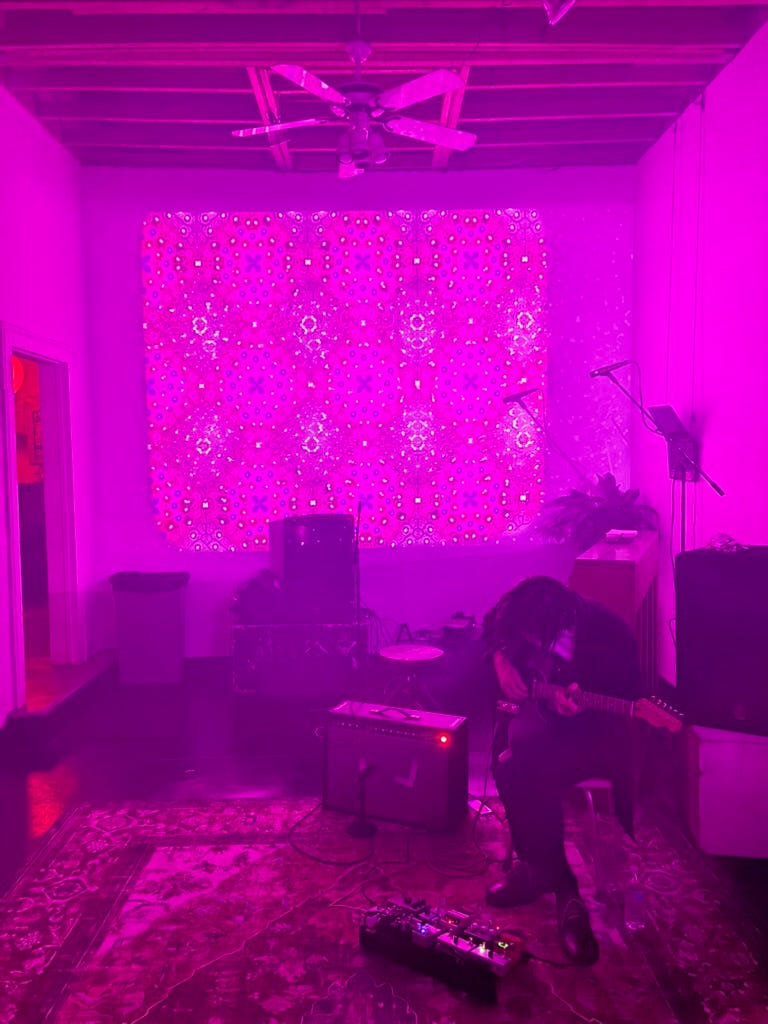
The visuals at the shows are also sick, especially the dude in the first room; I’m always blown away by how in sync he is with the music. How does that element work for you? Why is it an important part of the experience?
Really good visuals take the show into the stratosphere, especially with big, loud instrumental music. I feel like I can really let it wash over me. That’s Noah that you’re talking about in the first room. His setup is like pretty minimal, just the computer. In the other room, we have Ash, who goes by Phantom Train. He has a crazy analog and digital setup. I’ve literally had him explain to me what’s happening, and I still have trouble understanding. The visuals are a huge part of it now. Leo’s House is not a show so much as it’s an art installation. There are no breaks in the music, the artists are told not to address the crowd, there are no microphones on stage unless they need one for vocals, and the visuals are going all the time. The visuals are so essential to making it into that 360, overwhelming place.
What’s your reason for executing it in that way? Why schedule it like that? Why have those sort of stipulations? What are you trying to evoke?
There are all these pleasantries that come along with live performance. The like, “How you guys doing tonight? We got three more songs,” which I think no musician on stage, much less the crowd, enjoys. It feels like this stuff that you just have to do. I saw Fourtet DJ at the Palladium in 2018, and he played for six hours with no microphone, no lights, and no LED screen. He had none of the gross, dumb accouterments that accompany a lot of electronic music. It wasn’t this big dynamic party; it was just about what he was playing. With Leo’s House, I’m trying to remove that connective tissue that I don’t think anyone likes that much.
What do you hope people walk away from your shows feeling? What do you hope to impart on them?
I think the coolest thing that could happen is someone being like, “Wow, I feel different now that I saw that show.” If Leo’s House could facilitate any of that, I would be quite happy. I’ve been to many, many shows in my life, but the heaviest thing I’ve ever seen was Claire Rousay at Human Resources in Chinatown. It’s this beautiful, giant, blank box. She played there three or four years ago, and it was literally just a girl and a computer, but it was the heaviest performance I’ve ever seen. I’m still chasing the way that show felt to me. Music like this can be very easily self-serving; it can be more conceptual than music, you know. But when it’s done really well, it can just rip your brain open. If you’re like me and you’ve spent so many years listening to songs and writing songs and listening to albums and thinking about melody and harmony and chords and drum beats, you reach a point where you wonder where these forms break down. Like, what can arise from putting down song or melody? That’s where some of the most affecting music I’ve ever heard has come from. So I would love for someone to leave Leo’s House and be like, “Whoa! I just witnessed some real genius on the stage,” because I’ve felt like that watching people at Leo’s House.
What is experimental music? How do you define it? Because the term experimental is similar to alternative, right? Where it’s more of a relation than an actual thing? I’m always interested in how people concretize it.
God. I’m sure I’ll have a good answer in like two hours. For me, it’s music that is trying not to follow song form on purpose. It’s more interested in texture than harmonic information, maybe? You fucking know it when you see it. This isn’t actually a definition of experimental music, but the thing that I look for the most right now when trying to curate Leo’s House is people who are looking at their work on the level of sound, like just straight up what sounds are in this music. The thing that I enjoy about the music at Leo’s House is that it isn’t about anything. When you’re a songwriter, and you write songs about things, no matter how specific you are in your songs, the listener is gonna gonna imprint their own meaning onto them. I like music that is purely formal. When you talk about free jazz, or drone music, or dubstep, you can’t be like, “What is this song about?” Because that’s a funny question. What is an instrumental song about? There’s no answer to that. I think that gets a little closer to the true nature of music. You can say the same thing about songwriters too, whether it’s Bob Dylan or Joni Mitchell or Bruce Springsteen. There might be more meaning that you can pull out of it, but what is any song about? It’s about the listener. It’s about your own personal experience with it. I think experimental music is music that would be silly to ask “What is this about?” about. That’s a signifier to me as well.
How do you find new music?
I use Reddit. I use music blogs like Pitchfork. I use a lot of smaller Instagram accounts that recommend music, or label Instagram accounts. The best recommendations always do just come from people. There’s no better stamp of approval for a piece of music than someone you think is cool being like, “This music is cool.” It’s like, “Oh shit! I guess this music must be cool.” I also like Substackers who are really intense about certain genres and write about them all the time. First Floor is a really cool newsletter about electronic music. Oh, Wire magazine! I really like Wire. I pay to get it shipped from the UK, and it is so fucking worth it. They also don’t write about much music they don’t like. They’re not beholden to review the new big album, so it seems like 95% of the reviews are positive because it’s music they want to highlight. I really believe in the writers there. I really trust them. I also used to DJ on the radio a lot, and a huge portion of my life had to be digging and finding new music all the time. To be a really good DJ, you have to kind of never turn off; you have to be open to finding new music every moment of every day. I’m less like that now because I have other stuff I’m interested in. I also like YouTube and clicking on stuff purely based on the cover art in the thumbnail.
So LAX is closing at the end of the month, right?
Tonight actually,
Oh no way. How auspicious. How are you guys memorializing it?
There’s gonna be a variety show where a bunch of people who are connected to LAX are gonna play. I’m gonna DJ for a while. There’s gonna be some stunts and hijinks. We’re gonna burn an effigy. But let it be known that LAX will live on. We already have a bunch of pop-ups on the docket, and we’re gonna be back with a new space very soon.
Oh, cool! And then I’m guessing the intention for Leo’s House is to continue it at the new space?
You know… It’s gonna continue. I’ll just say that. Leo’s House will keep happening.